
- English
- Español
- Português
- русский
- Français
- 日本語
- Deutsch
- tiếng Việt
- Italiano
- Nederlands
- ภาษาไทย
- Polski
- 한국어
- Svenska
- magyar
- Malay
- বাংলা ভাষার
- Dansk
- Suomi
- हिन्दी
- Pilipino
- Türkçe
- Gaeilge
- العربية
- Indonesia
- Norsk
- تمل
- český
- ελληνικά
- український
- Javanese
- فارسی
- தமிழ்
- తెలుగు
- नेपाली
- Burmese
- български
- ລາວ
- Latine
- Қазақша
- Euskal
- Azərbaycan
- Slovenský jazyk
- Македонски
- Lietuvos
- Eesti Keel
- Română
- Slovenski
- मराठी
- Srpski језик

Edgebander Selection Guide for Furniture Factories: How to Pick the Right Equipment
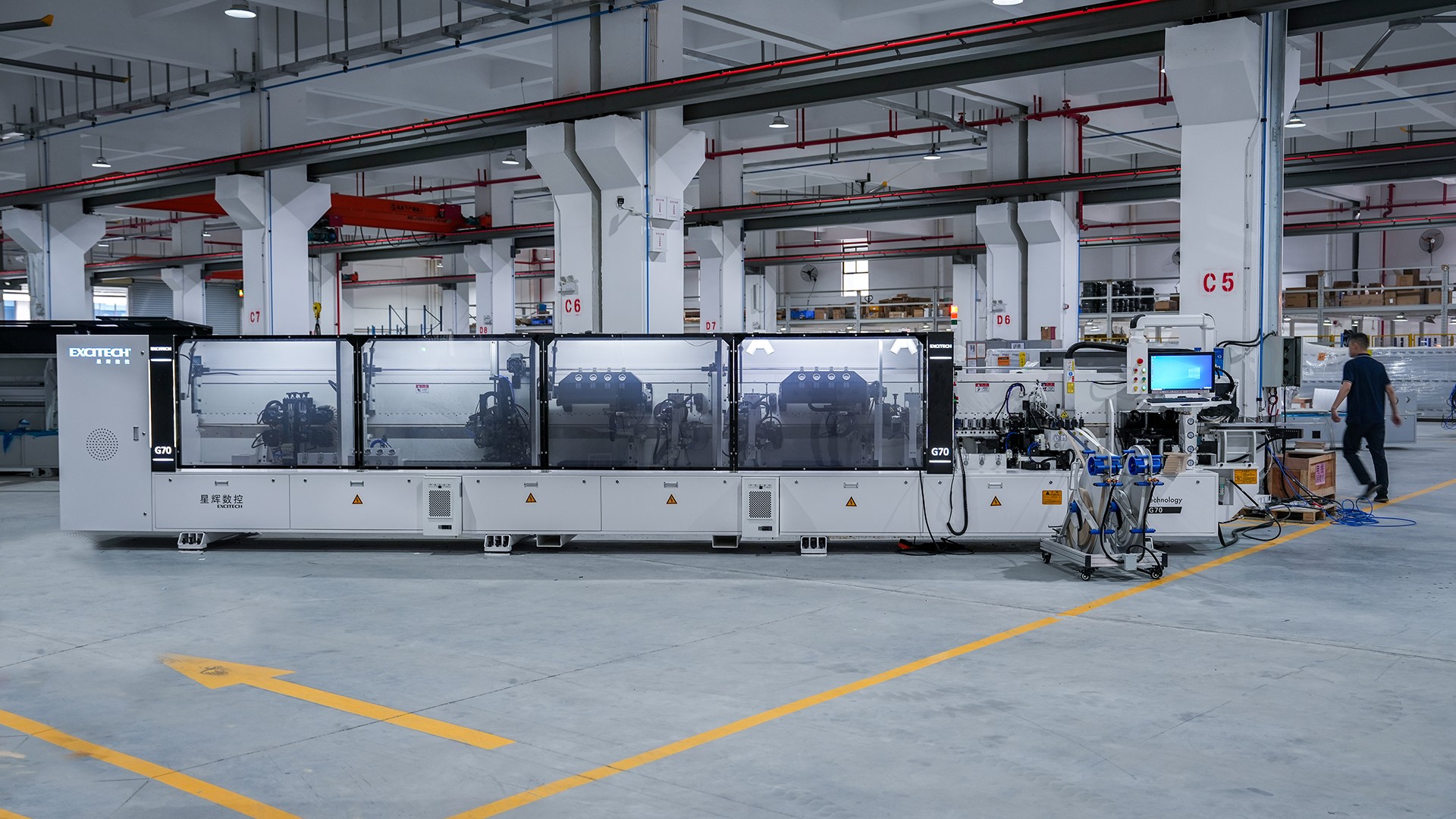
Common Edgebander Buying Pain Points for Cabinet Manufacturers
Most furniture factories make procurement mistakes by judging edgebanders solely from official spec sheets, such as operating speed and basic configurations. In actual custom cabinet production, workshops regularly process complex workpieces, including narrow panels, ultra-thin skeleton doors, hinge-cut panels, and notched components. Conventional edgebanders often deliver unstable finishing results, generate frequent rework, and lose machining precision after long-hour continuous operation. For this reason, reliable edgebander selection relies on three practical, production-tested core criteria, rather than superficial parameter advantages.
Three Key Criteria for Edgebander Selection
1. Stable processing for special-shaped and narrow panels
Ordinary edgebanders are prone to panel offset, operational vibration, incomplete end trimming and trimming blind spots when processing 40mm narrow panels, 5mm ultra-thin skeleton doors and hinge-hole workpieces. These common defects directly lead to repeated rework and material waste in mass production.
2. Dual adaptability for custom and batch production
Most entry-level edgebanders only support single production scenarios: some perform well in high-end laser finishing but require tedious adjustments for standard orders, while high-speed batch models fail to meet premium finishing standards. Modern furniture factories mainly run mixed-order production, which requires edgebanders to flexibly adapt to both high-end customized orders and conventional mass production.
3. Rigid frame and reliable transmission structure
Light-duty machine frames and unstable transmission systems can only maintain qualified precision in the early operation stage. After long-term continuous use, machining accuracy gradually declines, causing frequent downtime and unstable edge finishing. A heavy-duty, rigid mechanical structure sustains long-term operational precision and effectively reduces overall production and maintenance costs.
Technical FAQs for Edgebander Procurement
Laser Edgebanding vs Traditional Glue Edgebanding
Traditional hot-melt glue edgebanding leaves visible glue lines, which are prone to yellowing, peeling and delamination under long-term heat and moisture exposure, failing the quality requirements of high-end door and cabinet products. By contrast, laser edgebanding realizes physical fusion between panels and edge strips, delivering nearly invisible joints, smoother surface texture and superior moisture and crack resistance, ideal for premium custom furniture projects.
Key Configurations for Narrow & Thin Panel Production
Standard edgebanders are optimized for conventional large flat panels and perform unstably when processing narrow, thin and specially shaped workpieces. For factories with such production demands, equipment with precise servo control and stable conveying systems is essential to ensure consistent trimming quality in continuous mass production.
Equipment Selection for SMEs: High-End vs Cost-Effective Models
The selection depends on actual order composition. Factories focusing on high-end customized door panels can equip laser edgebanders to build product competitive advantages. Workshops undertaking mixed cabinet and door orders need full-process stable edgebanders to balance production efficiency and finished product quality.
EXCITECH Edgebander Solutions for Different Production Scenarios
EXCITECH 588 Laser Edgebander
This is a cost-effective laser edgebanding solution tailored for mid-to-high-end custom production. Equipped with a 3kW rectangular laser spot system, it achieves completely glue-free, seamless edge finishing for PET high-gloss panels, suede boards and acrylic panels. Adopting a rigid steel rail frame and servo fine-trimming structure, the machine delivers stable long-term operation with low maintenance costs, perfectly matching small and medium-sized factories focusing on light-luxury custom orders with limited budget.
EXCITECH G60U Full-Servo Edgebander
Designed for high-stability mixed batch production, this full-process heavy-duty edgebander features a caterpillar conveying system to ensure uniform clamping and stable feeding for non-stop long-shift operation. The full-servo control system supports precise and adjustable machining parameters, enabling stable processing of 40mm narrow panels, 5mm ultra-thin skeleton doors, hinge-hole panels and notched workpieces that challenge ordinary edgebanders. Its built-in recipe storage function supports one-click order switching, greatly reducing reliance on skilled operators.
Conclusion
There is no one-size-fits-all best edgebander for every furniture factory. The most suitable equipment must align with your actual order types and production scenarios. Rather than simply comparing theoretical spec sheet data, testing equipment with your own factory workpieces is the most reliable way to verify real operational stability and processing performance before purchase.